
Carpal Tunnel
What is Carpal Tunnel Syndrome?
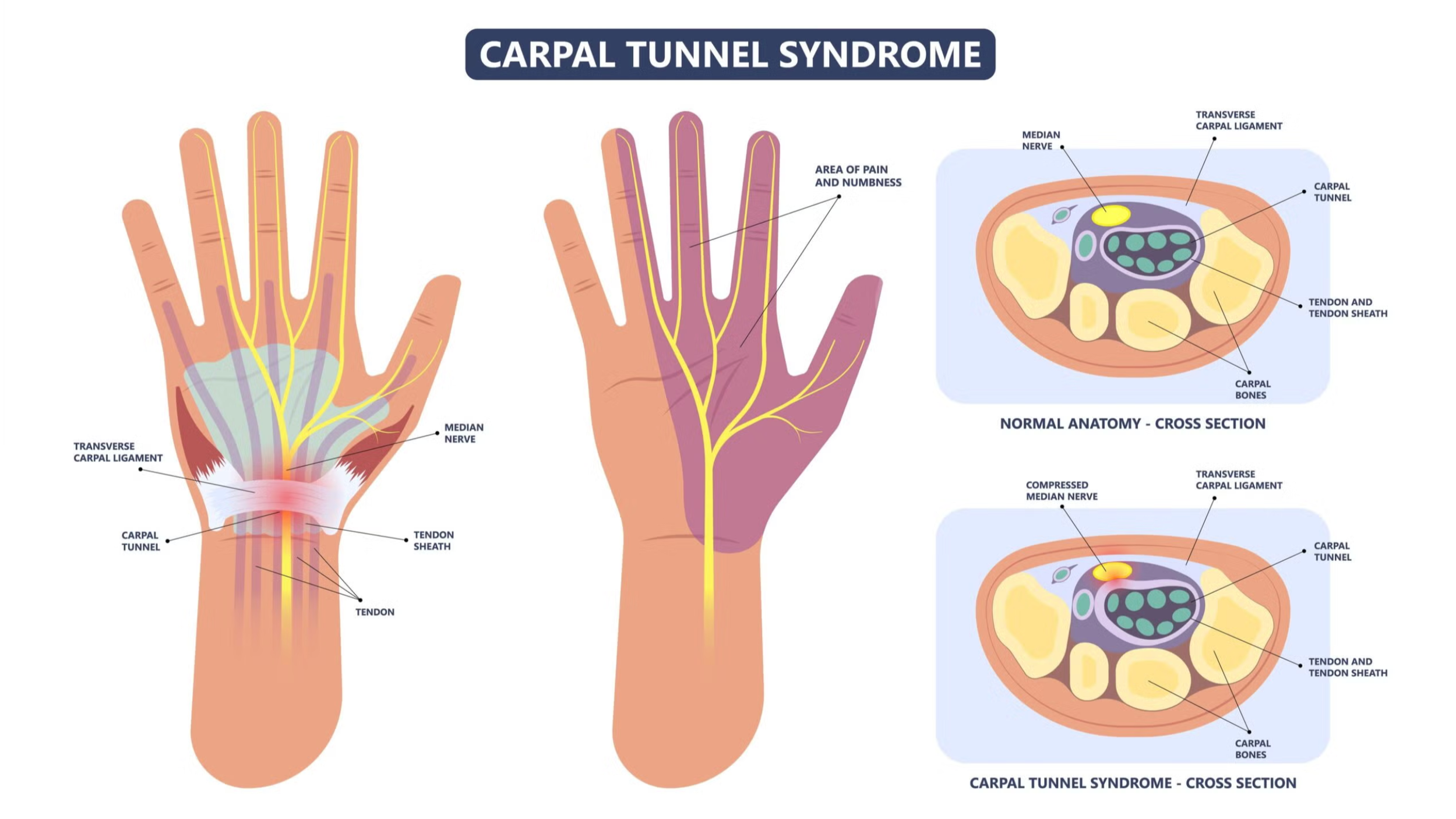
Carpal tunnel syndrome occurs when the median nerve, which is one of the main nerves in your wrist, gets compressed or squeezed. This happens because of increased pressure within the carpal tunnel. The carpal tunnel is a small space made up of the bones in your wrist and a thick band called the transverse carpal ligament, which forms the roof of the tunnel. Since the bones and ligament are solid, the tunnel does not change in size. There are nine tendons that bend the fingers and thumb inside the carpal tunnel, along with the median nerve. The median nerve provides feeling (sensation) to the skin of the thumb, index, and middle fingers, as well as half the ring finger. The nerve helps control the muscles at the base of the thumb (thenar muscles).
Causes
The most likely cause of carpal tunnel syndrome is extra pressure on the median nerve at the wrist inside the carpal tunnel. This extra pressure can come from swelling (inflammation) inside the tunnel.
There are some risk factors that increase the chances of getting carpal tunnel syndrome. For example, women are more likely than men to experience carpal tunnel syndrome. It is more likely to occur with aging. Each decade someone is alive, there are more people who experience carpal tunnel syndrome. Carpal tunnel syndrome is more common in people with obesity, diabetes, alcohol addiction, fibromyalgia, and hypothyroidism. If you have carpal tunnel syndrome, your children may be more likely to get it. Pregnancy can also cause extra body fluid retention, which may add swelling and pressure into the tunnel, increasing the chances for carpal tunnel syndrome.
Signs and Symptoms
Some of the symptoms of carpal tunnel syndrome may include:
Numbness and tingling that is often worse at night
Waking up at night, having to shake the hand or hold it over the side of the bed
Fingers feeling swollen or fuzzy
Pain or burning sensation in the fingers
Dropping objects
Weak pinch
Discomfort in the wrist, hand, or fingers
Pain shooting up the forearm, sometimes to the shoulder
The main symptom of carpal tunnel syndrome is numbness and/or tingling in the thumb, index and middle fingers, and all or half of the ring finger. In most cases of carpal tunnel syndrome, the numbness/tingling comes on gradually. If mild, the symptoms may come and go for months or even years without worsening. The symptoms can come and go during the day or at night. The symptoms may vary based on time of day, activity or wrist position. If the condition becomes worse, the numbness may become constant. In the most severe cases, the muscles at the base of the thumb become weak and shrink in size. This can result in significant thumb weakness, especially when grabbing objects. Dropping things may happen from the numbness and/or thumb weakness.
In some types of injuries where there is deformity from a fracture or dislocation or significant internal bleeding, carpal tunnel syndrome may come on rapidly. Because the pressure rises rapidly from the injury, the nerve does not have time to adjust. This often creates more severe symptoms with sudden pain and tingling. This can create an emergency.
Discomfort or pain can also occur with a gradual onset in carpal tunnel syndrome. However, pain is typically not the first or main symptom. The pain from carpal tunnel syndrome usually only occurs after the numbness and tingling has started. The pain resolves when the numbness and tingling is alleviated. Shaking the hand or bending/straightening the fingers repeatedly may alleviate the numbness and tingling. The pain of carpal tunnel syndrome may be only in the hand or may radiate to the forearm, even to the shoulder.
Activities That May Trigger Symptoms
Certain activities that involve making a fist or bending your wrist can trigger symptoms. Some common activities that cause numbness include:
Sleeping
Reading a book
Holding your phone
Driving
Excessive typing
Prolonged repetitive tasks
The way the wrist is positioned during these activities can cause increased pressure within the carpal tunnel, leading to discomfort. While symptoms can sometimes be worse at night, sleep has not been shown to cause carpal tunnel.
Early on, your numbness and tingling may be easily resolved by stopping the activity or moving your wrist out of a bent position. If the pressure continues off and on for weeks to months, the symptoms may come on faster during the activity. It may also take longer for the symptoms to go away after the activity stops. Eventually, symptoms can become constant.
Repetitive activities in the workplace with forceful or repetitive gripping or vibration can also increase symptoms. However, it is difficult to determine if the work activity is the main cause of the symptoms or if work is incidentally just aggravating a condition that is already present (unrelated to work). The determination of the cause of symptoms requires experienced and specialized health care providers to assess all factors.
Diagnosis of Carpal Tunnel Syndrome
The diagnosis of carpal tunnel syndrome is made based on history and physical examination alone. It is important to know which fingers experience the numbness or tingling and which fingers do not. When performing the physical exam, your hand surgeon will test your sensation in your fingers. They may also perform sensory testing of the forearm and arm. They may also perform some tests including the Phalen maneuver, the Tinel test, and a compression test. These tests are designed to increase pressure on the median nerve.
Electrodiagnostic studies (EMG) may also be used in the diagnosis. These provide evidence of nerve function or dysfunction by measuring the speed of electricity in the nerve. Also, they can help to find other causes of numbness which may have similar symptoms, such as diabetic neuropathy or cervical radiculopathy.
Ultrasound imaging can be used to visualize the size of the median nerve. A large median nerve within the carpal tunnel can help diagnose carpal tunnel syndrome. Anatomic imaging tests such as ultrasound or magnetic resonance imaging (MRI) are often helpful when other conditions are suspected like a ligament tear or tendinitis that may contribute to pain.
Common Non-Surgical Treatment of Carpal Tunnel Syndrome
The main goal of treatment is to reduce or remove the causes of increased nerve pressure. This should result in a decrease in symptoms. Some non-surgical treatment options may include:
Wrist splints or braces
Oral anti-inflammatory medicine
Steroid injection (cortisone shot)
Surgical Treatment of Carpal Tunnel Syndrome
Carpal tunnel release is a very reliable surgery with excellent outcomes. There are several different surgical techniques. All techniques involve cutting the transverse carpal ligament, which removes the pressure on the nerve. By opening the ligament, there is more room for the tendons and the nerve to pass through the tunnel without pressure. This surgery may be done with the patient awake or under anesthesia.
After carpal tunnel release surgery, your surgeon may recommend temporarily avoiding certain activities. Moving the fingers right away helps to limit stiffness, swelling, and scar tissue.
The surgical scar and surrounding area may go through some mild changes in color, firmness, and tenderness over the first several months. These changes are normal. Most scars won’t change much after 9 months. Your surgeon may prescribe hand therapy in some cases. Returning to work after carpal tunnel surgery is dependent upon each person’s symptoms, job demands, and employer policies. In patients with less physically demanding jobs, they will be able to return to work in a few days. Other jobs may take weeks to safely return. Your surgeon will discuss the best recovery plan with you.
Outcomes After Surgery
The best results are obtained when carpal tunnel is recognized and treated earlier. This means seeking treatment when your symptoms first start, rather than waiting till they get worse. When treated earlier, there will likely be a higher chance of success and getting you back to normal.
If your symptoms are severe and constant when you seek treatment, results are less predictable. However, treatment will help the problem from getting worse.
Can SoftWave Therapy Help Treat Carpal Tunnel Syndrome?
SoftWave therapy can be an effective treatment for Carpal Tunnel Syndrome due to its mechanisms that promote natural healing. This therapy employs low-intensity shock waves that penetrate the affected area, stimulating cell metabolism, increasing blood flow, and aiding in the regeneration of damaged tissues.
The shock waves essentially trigger the body’s innate healing processes, which can alleviate the compression of the median nerve that characterizes Carpal Tunnel Syndrome. Through increased circulation and cellular activity, inflammation may reduce and nerve function may improve, leading to a reduction in symptoms such as pain, numbness, and weakness.
